Rustic Coq au Vin: Classic French Comfort Reimagined
Coq au Vin, the quintessential French chicken stew, is more than just a recipe; it’s an experience. For centuries, this rustic dish has captured the hearts and palates of home cooks and gourmands alike, and for good reason. There’s something incredibly comforting and deeply satisfying about a pot of slow-simmered chicken bathed in a rich, velvety sauce. The magic of Coq au Vin lies in its harmonious blend of tender chicken, earthy mushrooms, smoky lardons, and the non-intoxicating aroma of good red grape juice. It’s the kind of meal that transforms a simple weeknight into a cozy culinary adventure, perfect for sharing with loved ones. The transformation of humble ingredients into something so profoundly delicious is truly what makes Coq au Vin a timeless classic that I, for one, can never get enough of.
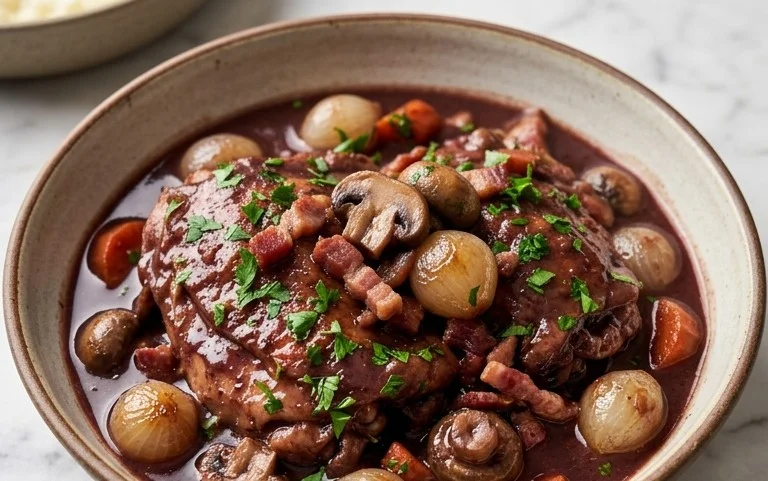
Coq au Vin: A Rustic French Classic Reimagined
There’s something undeniably comforting and sophisticated about a well-made Coq au Vin. This classic French dish, which translates to “rooster in grape juice,” is a testament to slow cooking, deep flavors, and the magic that happens when simple ingredients are allowed to meld beautifully over time. While traditionally made with a tougher rooster, modern versions often use chicken, which we’ll be using today. The result is incredibly tender, fall-off-the-bone chicken bathed in a rich, savory, and slightly sweet grape juice sauce. It’s a dish that’s perfect for a special occasion or simply when you want to impress yourself and your loved ones with a taste of rustic French home cooking. Let’s get started!
Ingredients:
- 4 bone-in, skin-on chicken thighs
- 4 chicken drumsticks
- Salt and freshly ground black pepper (to taste)
- 2 ½ tablespoons vegetable oil
- 4 ounces lardons or slab beef beef bacon (diced)
- 1 large yellow onion (chopped)
- 2 large carrots (peeled and cut diagonally in 1-inch pieces)
- 4 cloves garlic (minced)
- 1 tablespoon tomato paste
- 1 tablespoon all-purpose flour
- 1 bottle (750ml) red grape juice (preferably a Burgundy or Pinot Noir)
- 1 bay leaf
- 5 sprigs fresh thyme (tied with kitchen twine)
- 3 cups chicken stock (homemade or store-bought)
- 4 tablespoons unsalted butter
The Culinary Journey: Crafting Your Coq au Vin
The beauty of Coq au Vin lies in its layered approach to flavor development. We’ll start by building a robust base and then let the braising process do its magic.
Step 1: Preparing the Chicken and Beef Bacon Base
Begin by patting your chicken pieces thoroughly dry with paper towels. This is a crucial step for achieving beautifully browned chicken. Season them generously on all sides with salt and freshly ground black pepper. In a large, heavy-bottomed pot or Dutch oven, heat the vegetable oil over medium-high heat. Add the chicken pieces, skin-side down first, and sear them until deeply golden brown on all sides. This browning process not only adds color but also creates a delicious fond (the browned bits stuck to the bottom of the pan) that will contribute immense flavor to your sauce. Once browned, remove the chicken and set it aside on a plate.
Next, add the diced lardons or beef beef bacon to the same pot. Cook them over medium heat, stirring occasionally, until they are crisp and have rendered their fat. This rendered fat will be used to sauté our aromatics. Once the beef bacon is crisp, remove it with a slotted spoon and set it aside with the chicken. Leave the rendered fat in the pot.
Step 2: Sautéing the Aromatics and Building the Sauce Foundation
Reduce the heat to medium and add the chopped yellow onion and diagonally cut carrots to the pot. Cook, stirring frequently, until the onions are softened and translucent, and the carrots are beginning to soften, about 8-10 minutes. This slow sautéing allows the vegetables to release their sweetness. Now, add the minced garlic and cook for another minute until fragrant, being careful not to burn it.
Stir in the tomato paste and cook for about 1-2 minutes, stirring constantly. This helps to deepen its flavor and remove any raw taste. Sprinkle the all-purpose flour over the vegetables and stir well to coat everything. Cook for another minute, stirring, to toast the flour slightly. This roux will help to thicken our sauce later.
Step 3: Deglazing and Simmering with Grape Juice
Pour in the entire bottle of red grape juice. Use a wooden spoon to scrape up any browned bits from the bottom of the pot – this is where all the flavor is! Bring the liquid to a simmer, then let it cook for about 5-7 minutes, allowing some of the non-alcoholic alternative to evaporate and the liquid to reduce slightly. This step is key to developing a more concentrated grape juice flavor.
Step 4: The Braise: Melding Flavors for Tenderness
Return the seared chicken pieces and the crisp beef bacon back into the pot. Add the bay leaf and the tied bundle of thyme sprigs. Pour in the chicken stock, ensuring the chicken is mostly submerged. Bring the liquid back to a gentle simmer, then reduce the heat to low, cover the pot tightly, and let it braise. This is where the magic happens. Allow it to cook for at least 45 minutes to 1 hour, or until the chicken is incredibly tender and almost falling off the bone. The low and slow cooking process ensures the chicken becomes succulent and absorbs all the wonderful flavors from the sauce. You can also place the covered pot in a preheated oven at 325°F (160°C) for the same duration.
Step 5: Finishing the Sauce and Serving
Once the chicken is tender, carefully remove the chicken pieces and set them aside. Remove and discard the bay leaf and thyme bundle. If you want a thicker sauce, you can continue to simmer the liquid uncovered over medium heat until it reaches your desired consistency. Alternatively, you can create a beurre manié: in a small bowl, mash together the 4 tablespoons of unsalted butter with an equal amount of flour until a smooth paste forms. Whisk small bits of this beurre manié into the simmering sauce until it thickens to your liking. This is a classic French technique for achieving a velvety smooth sauce. Taste and adjust seasoning with salt and pepper if needed. Return the chicken to the pot to warm through in the sauce.
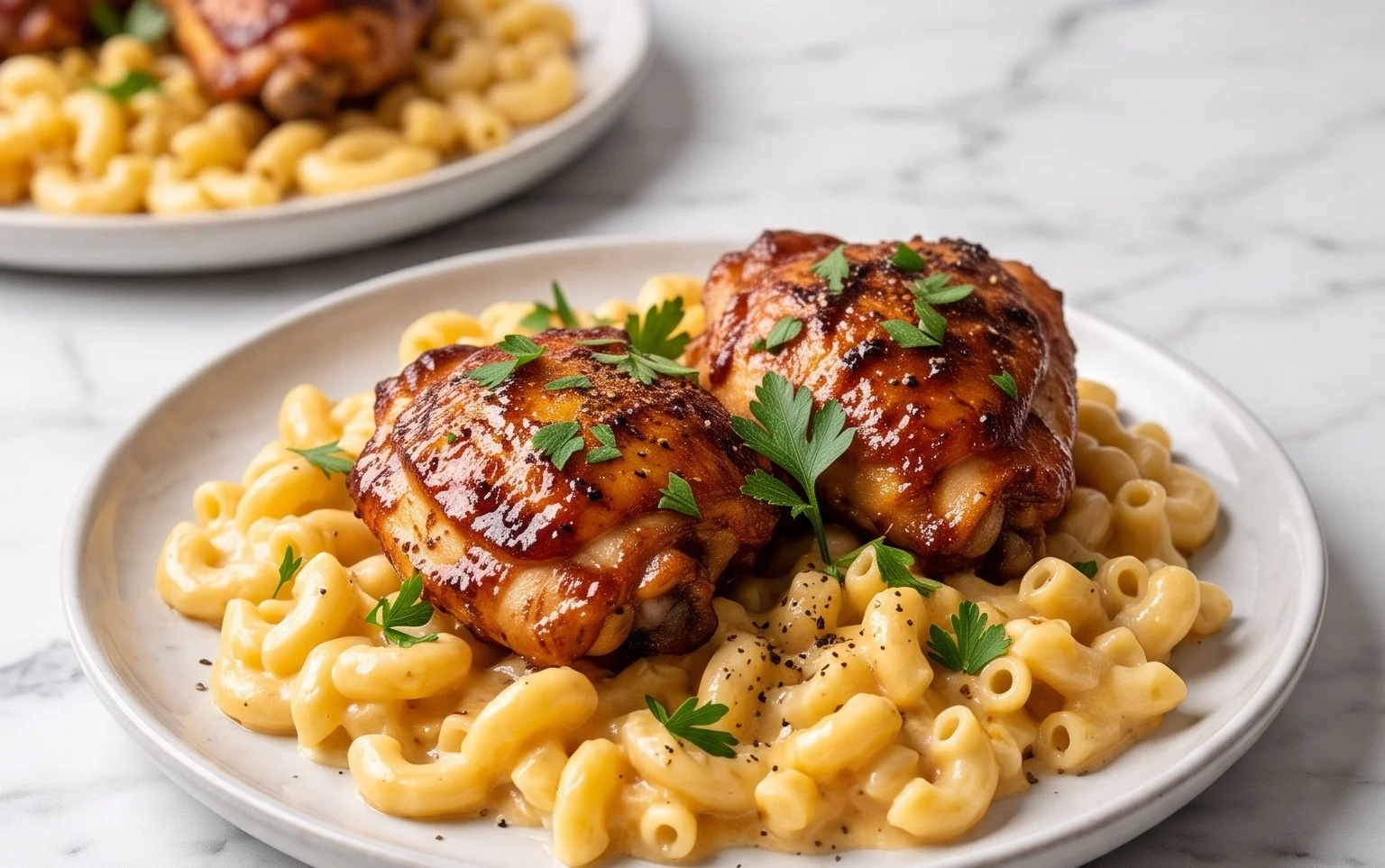
Serve your Coq au Vin hot, perhaps over creamy mashed potatoes, crusty bread to soak up the glorious sauce, or even simple boiled new potatoes. Garnish with fresh parsley if desired. Enjoy this taste of French culinary tradition!

Conclusion:
There you have it – your guide to creating a truly classic and incredibly satisfying Coq au Vin. This recipe is fantastic because it transforms simple ingredients into a rich, deeply flavored, and elegant dish that feels both rustic and refined. The slow braising tenderizes the chicken to perfection, while the red grape juice, lardons, mushrooms, and aromatic vegetables meld into a luxurious sauce that will have you scraping the pot clean.
Serving Coq au Vin is where the magic truly shines. It’s traditionally enjoyed with creamy mashed potatoes to soak up every last drop of that glorious sauce, but crusty bread is an absolute must for dipping. For a lighter touch, consider serving it alongside buttery egg noodles or even a simple pilaf.
If you’re feeling adventurous, consider variations! Swap the traditional Burgundy grape juice for a Pinot Noir from another region, or even experiment with a robust Côtes du Rhône. For a touch of sweetness, a tablespoon of balsamic glaze can add another layer of complexity. Don’t be afraid to explore! I truly encourage you to try making this Coq au Vin; it’s a rewarding culinary journey that’s perfect for a cozy dinner or even for impressing guests.
Frequently Asked Questions about Coq au Vin:
Can I make Coq au Vin ahead of time?
Absolutely! Coq au Vin is often even better the next day, as the flavors have more time to deepen and meld. Simply let it cool completely, store it in an airtight container in the refrigerator, and reheat gently on the stovetop or in the oven.
What kind of chicken is best for Coq au Vin?
While you can use chicken pieces, a whole chicken cut into parts (like thighs, drumsticks, and breasts) works wonderfully. The bone-in pieces add extra flavor to the braising liquid. Just ensure they are well-browned for the best results.
What if I don’t have pearl onions?
No problem! You can substitute with quartered shallots or even small boiling onions. Just adjust the cooking time slightly as they may break down differently. The key is to have some small, sweet alliums to soften and add their distinct flavor to the dish.
Coq au Vin
A classic French chicken stew braised in red grape juice with bacon, onions, carrots, and herbs.
Ingredients
-
4 bone-in, skin-on chicken thighs
-
4 chicken drumsticks
-
Salt and freshly ground black pepper (to taste)
-
2 ½ tablespoons vegetable oil
-
4 ounces slab beef bacon (diced)
-
1 large yellow onion (chopped)
-
2 large carrots (peeled and cut diagonally in 1-inch pieces)
-
4 cloves garlic (minced)
-
1 tablespoon tomato paste
-
1 tablespoon all-purpose flour
-
1 bottle (750ml) red grape juice (preferably a Burgundy or Pinot Noir)
-
1 bay leaf
-
5 sprigs fresh thyme (tied with kitchen twine)
-
3 cups chicken stock (homemade or store-bought)
-
4 tablespoons unsalted butter
Instructions
-
Step 1
Pat chicken dry and season generously with salt and pepper. -
Step 2
Heat vegetable oil in a Dutch oven or large pot over medium-high heat. Brown chicken pieces on all sides in batches, then remove and set aside. -
Step 3
Add diced beef bacon to the pot and cook until crisp. Remove bacon and set aside, leaving drippings in the pot. -
Step 4
Add chopped onion and carrots to the pot and cook until softened, about 5-7 minutes. Stir in minced garlic and tomato paste and cook for 1 minute more. -
Step 5
Sprinkle flour over the vegetables and stir to coat. Cook for 1 minute, then gradually pour in the red grape juice, stirring to scrape up any browned bits from the bottom of the pot. -
Step 6
Return the browned chicken pieces to the pot. Add the bay leaf and thyme sprigs. Pour in enough chicken stock to partially submerge the chicken. -
Step 7
Bring the liquid to a simmer, then reduce heat to low, cover, and braise for 1 to 1.5 hours, or until chicken is tender. -
Step 8
Remove chicken, bay leaf, and thyme. Skim off excess fat from the sauce. In a separate pan, melt butter and cook until it turns a nutty brown. Stir the browned butter into the sauce. Thicken sauce if necessary by simmering. -
Step 9
Return chicken to the pot and gently heat through. Garnish with reserved crispy beef bacon.
Important Information
Nutrition Facts (Per Serving)
It is important to consider this information as approximate and not to use it as definitive health advice.
Allergy Information
Please check ingredients for potential allergens and consult a health professional if in doubt.